
In Bangladesh, the duration of a criminal case is governed by both statutory timelines and practical realities. While the law sets specific limits, the actual time a case takes can vary significantly based on the court’s backlog and the complexity of the charges.
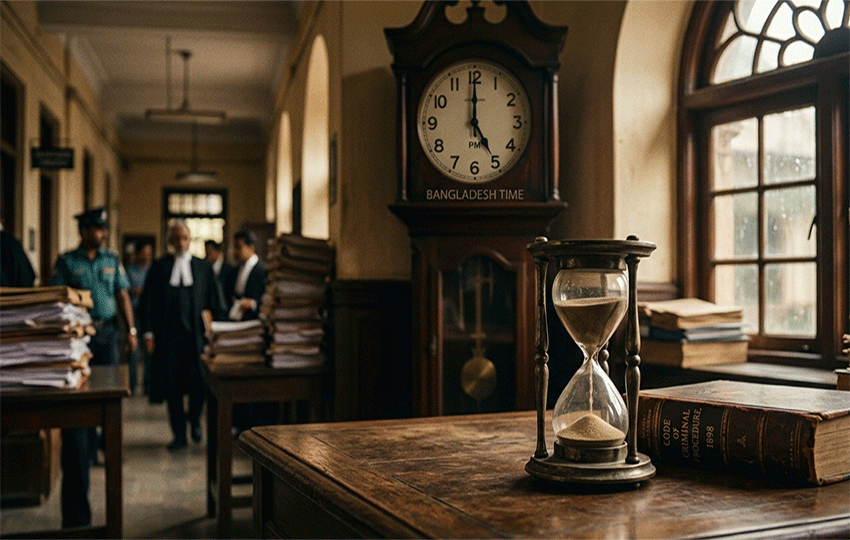
According to Section 339C of the Code of Criminal Procedure (CrPC), there are statutory periods within which a trial should be concluded:
Magistrate Courts: Trials should ideally be completed within 180 days from the date the case is received for trial.
Sessions Courts: For more serious offenses, the trial should be completed within 360 days.
Note: If a trial is not concluded within these timeframes, the accused may be eligible for bail (unless the offense is particularly grave and the court provides written reasons for denial).
In practice, a case moves through three main phases. Here is a breakdown of how time is usually distributed:
| Phase | Key Actions | Estimated Time |
| Investigation | Filing the FIR, arrest, evidence collection, and submission of the Charge Sheet or Final Report. | 3 to 9 months |
| Cognizance & Framing | The Magistrate reviews the report, takes “cognizance,” and formally frames charges against the accused. | 2 to 6 months |
| The Trial | Examination of prosecution witnesses (PW), cross-examination, defense testimony, and final arguments. | 1 to 3+ years |
While the law aims for a quick resolution, several factors often extend cases beyond the 1-2 year mark:
Witness Attendance: One of the most common causes of delay is the failure of prosecution witnesses (especially police officers or medical experts) to appear on scheduled dates.
Court Backlog: With millions of pending cases in the Bangladeshi judiciary, courts are often overbooked, leading to long intervals between hearing dates.
Interlocutory Appeals: Either party may file “revisions” or “quashment” petitions in the High Court Division, which can stay (pause) the trial proceedings for months or even years.
Absconding Accused: If there are multiple accused individuals and one goes missing, the trial for the others may be delayed until legal formalities (like newspaper advertisements) are completed.
For a straightforward criminal matter (such as a minor assault or a simple theft), you can expect a resolution in 2 to 3 years. For complex cases (narcotics, murder, or large-scale fraud), it is not uncommon for the process to take 5 to 7 years or longer if it goes through the appeal process.