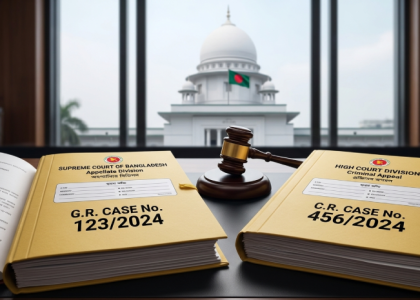

Bail, in the abstract, sounds simple. A temporary release. A recognition that a person is still presumed innocent. Yet, anyone who has spent time in a Bangladeshi courtroom knows the reality is far more textured—sometimes even unpredictable.
Judges do not grant or refuse bail in a vacuum. Each order carries a quiet negotiation between liberty and risk. And when bail is rejected, it is rarely for a single, neat reason.

Let’s unpack how that decision often unfolds in practice.
Under the Code of Criminal Procedure, 1898, offences are broadly divided into bailable and non-bailable categories. In bailable offences, release is almost automatic. In non-bailable offences, however, discretion enters the picture—and with it, uncertainty.
Still, the law itself does not provide a rigid checklist for refusal. What it offers instead is a framework. The rest is shaped by facts, arguments, and, sometimes, the judge’s sense of caution.
Some cases carry a weight that is difficult to ignore.
Allegations involving serious offences—murder, rape, large-scale financial fraud, or offences against the state—tend to make courts pause. Not always, but often. The seriousness of the charge may suggest that the accused has a stronger motive to evade justice. That possibility alone can tilt the balance.
It would be inaccurate to say bail is automatically denied in such cases. Courts have granted bail even in grave matters. But the threshold becomes higher. The scrutiny sharper.
One recurring question surfaces in almost every bail hearing: will the accused return to face trial?
If the court senses—even faintly—that the accused might abscond, bail is likely to be refused. This concern may arise from prior conduct, lack of fixed residence, or even the nature of the alleged offence.
Sometimes the fear is explicit. At other times, it lingers beneath the surface, shaping the outcome without being fully articulated.
Witnesses are often fragile participants in the justice system. Their vulnerability is well understood.
If there is a reasonable apprehension that the accused could influence, intimidate, or otherwise interfere with witnesses, courts tend to err on the side of caution. This is especially true in cases where the accused and witnesses share a close social or geographical connection.
Interestingly, even the possibility—not proof—of such interference may be enough to justify refusal.
At the bail stage, courts do not conduct a full trial. That much is clear. Still, they do take a preliminary look at the evidence.
If the materials on record appear to strongly implicate the accused, bail becomes harder to secure. Not impossible, but harder. The strength of the prosecution’s case, even at an early stage, can influence judicial hesitation.
There is a subtle tension here. On one hand, the presumption of innocence remains intact. On the other, the court cannot ignore what the case diary seems to indicate.
Past conduct has a way of resurfacing.
If the accused has a history of similar offences or is a habitual offender, courts may view bail as a risk rather than a right. The reasoning is straightforward: prior behavior could suggest a pattern.
That said, reliance on past records must be handled carefully. Overemphasis could risk punishing someone for earlier allegations rather than the present one. Yet, in practice, such history often carries weight.
Timing matters more than most clients expect.
During the early stages of investigation, courts are generally more reluctant to grant bail. The logic is procedural: investigators need space to gather evidence without interference.
As the investigation progresses—or concludes—the same case may be viewed differently. What was once a ground for refusal may gradually lose force.
A rejected bail application does not close the door.
Fresh grounds. Changed circumstances. Delays in trial. These can all justify a renewed application. Higher courts, particularly the Sessions Court or the High Court Division, often revisit earlier refusals.
It is not uncommon to see bail granted at a later stage in the very same case where it was initially denied.
This is perhaps the most difficult part to pin down.
Judicial discretion is not arbitrary, but it is flexible. Two similar cases may produce different outcomes. Not because the law is inconsistent, but because facts rarely align as neatly as legal categories suggest.
That unpredictability can be frustrating. It can also be necessary. A rigid system might fail to account for the nuances that each case inevitably carries.
Bail rejection in Bangladesh is not governed by a single rule or formula. It emerges from a layered assessment—seriousness of the offence, risks posed by the accused, the state of the investigation, and the broader interests of justice.
For clients, this often feels opaque. For practitioners, it demands careful preparation and strategic timing.
And for the court? It remains a balancing act. One that is repeated, case after case, often under quiet pressure.